How to Size Your Rainwater Wall: A Simple Sizing Guide
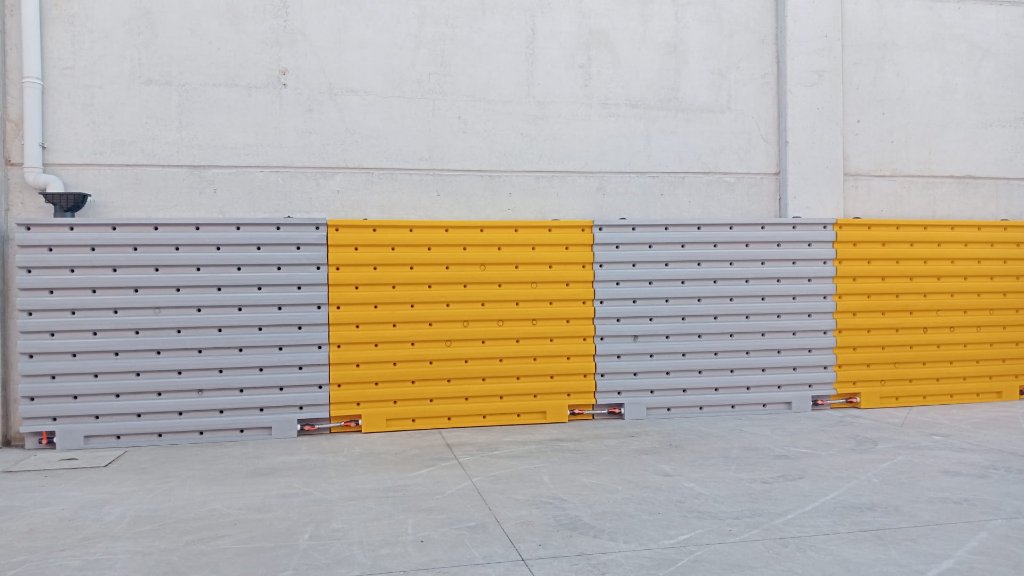
One of the most common questions we get asked is: "how many panels do I actually need?" The good news is that sizing a Rainwater Wall system is straightforward once you know a few basics about your property.
Step 1: Know Your Roof Area
Your roof is your collection surface. Measure the footprint of the roof area draining into the downpipe you plan to connect — this is usually given in square metres. As a rule of thumb, 1m² of roof in the UK yields roughly 600–800 litres of harvestable rainwater per year, depending on your region's rainfall.
Step 2: Decide How You'll Use the Water
Your intended use determines how much storage actually makes sense:
Garden irrigation only — a single panel (1,000 litres) is often enough for an average garden, since you're topping up little and often through the growing season.
Garden + external cleaning (car washing, patio jet-washing) — 2–3 panels (2,000–3,000 litres) gives a buffer so you're not relying on frequent rainfall to refill.
Commercial or high-frequency use — sites using harvested water for vehicle washing, cleaning, or large-scale irrigation typically need 10+ panels connected in a modular run, as seen in our underground car park case study.
Step 3: Check Your Available Wall Space
Each panel measures 225×175×30cm. Because the Rainwater Wall is wall-mounted or freestanding, measure the length of wall or fence line you have available — this is often the real limiting factor rather than budget.
Step 4: Start Small, Scale Later
Because the system is fully modular, you don't need to commit to your final capacity up front. Many customers start with a single panel and add more later, simply connecting new units into the existing pipework with standard globe valves.
Rule of Thumb
As a starting point: 1 panel per 40–60m² of roof area for general garden and household use, scaling up from there for higher-demand or commercial applications.
Still not sure what's right for your property? Get in touch and we'll help you work out the ideal setup.