Wall-Mounted vs Underground: Comparing Rainwater Harvesting Systems
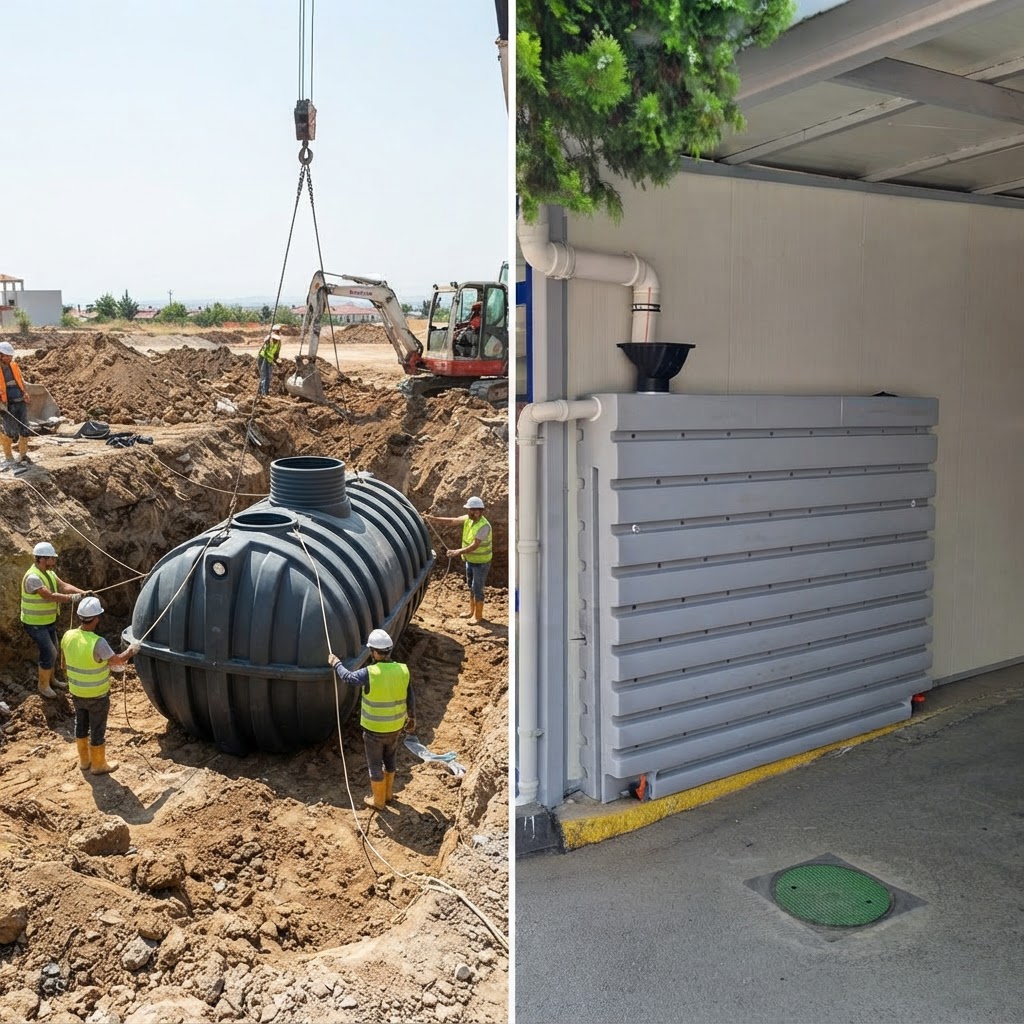
For decades, rainwater harvesting meant one thing: a large underground tank, buried deep in the garden and connected to a pump. It's a proven approach, but it isn't the only one anymore. Wall-mounted systems like the Rainwater Wall are giving homeowners and businesses a very different way to store rainwater — and the differences matter.
Installation: Digging vs Mounting
Underground tanks require excavation, groundworks and often specialist contractors, which means longer installation times, more disruption to your garden or site, and higher upfront labour costs. A wall-mounted system like the Rainwater Wall simply fixes to an existing wall and connects to the downpipe, meaning most installations are completed in hours rather than days.
Visibility and Access
An underground tank is hidden from view but also hidden from access — checking water levels or carrying out maintenance means lifting covers or accessing below-ground chambers. A wall-mounted system keeps everything visible and within easy reach, making it simple to monitor and maintain.
Cost Considerations
Because there's no excavation or groundworks involved, wall-mounted systems typically come with a lower total installation cost. There's also less risk of unexpected costs from ground conditions, existing services, or access issues that can arise once digging begins.
Scalability
Expanding an underground tank system usually means further excavation. With a modular wall-mounted design, additional panels can simply be added to the existing setup, as shown in our Built to Grow case study, allowing capacity to grow alongside demand without repeating the disruptive parts of the original installation.
Which One Is Right for You?
Underground tanks can still make sense for very large-capacity projects where space above ground is limited. For most homes and many commercial properties, however, a wall-mounted system offers a faster, more accessible and more scalable alternative. Get in touch with our team to talk through which approach suits your property.